
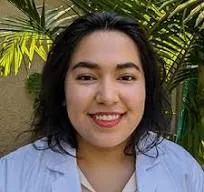
Scholar Focuses on Breast Cancer Tumor Signals
ARCS Scholar Nancy Leon-Rivera is pursuing her PhD in biomedical sciences, with a focus on cancer biology, at San Diego State University. Specifically, she is focused on the tumor environment in breast cancer.
“There are so many cells and signals interacting with each other, and it’s so complex. We still don’t completely understand how all the pieces fit together. Trying to solve pieces of this huge complex problem is what drives me forward in my research,” she explained.
Before starting her PhD in the lab of Dr. Teresa Monkkonen at San Diego State, Leon-Rivera participated in four different academic labs, each focused on a different area of biology. Those experiences resulted in five co-authored publications.
“What I loved about being in those labs was that I felt comfortable asking questions and learning from mistakes,” she said.
Her rotation in Dr. Monkkonen’s lab led to her deep interest in studying the tumor microenvironment (TME).
“There have been a lot of advances in Triple-Negative Breast Cancer research since I started my PhD,” she said, “specifically in understanding how we can better classify these tumors and how they respond to different treatments. There has been a growing interest in looking beyond the cancer cells and understanding how the microenvironment influences treatment response and metastasis, which is relevant to my thesis research.”
This type of cancer grows quickly and can be challenging to treat.
“Triple-Negative Breast Cancer (TNBC) is an aggressive form of breast cancer that lacks three common markers targeted by breast cancer treatments: estrogen receptors, progesterone receptors, and HER,” Leon-Rivera explained. “TNBC tends to grow and spread more quickly than other subtypes and has a high risk of recurrence. Although early-stage TNBC can be treated successfully, advanced disease remains difficult to treat, highlighting the need for more effective therapies.”
Leon-Rivera said that published papers and attending conferences inform her of new therapies, treatment combinations, and ways of thinking about the tumor microenvironment that are constantly being investigated. She hopes her research may lead to a better understanding of how autophagy functions in the tumor microenvironment and identify how this knowledge could eventually be used to improve cancer treatments for aggressive cancers like Triple-Negative Breast Cancer.
“That’s what continues to pull me into science; there’s always something unknown,” she said. “Like many research labs right now, we’ve faced challenges with funding and access to some of the resources and equipment we need, which can slow things down. But research rarely goes as planned.”
Leon-Rivera hopes that her eventual PhD thesis will be “one that provides a meaningful piece of the puzzle.”
Her ARCS award sponsor with the San Diego Chapter is Tanya M. Schierling.
“I really appreciate the personal connection with her. It’s been meaningful to see the community behind the award support, and to see the support I receive comes from people who genuinely care about students and scientific research,” Leon-Rivera said.
- Log in to post comments